
What Are Types Of Dentures? A Complete Guide to Restoring Your Smile

Tooth loss is not just a cosmetic issue; it is a functional crisis that affects your ability to speak, eat, and smile with confidence. Whether due to age, injury, or periodontal disease, losing teeth can lead to bone resorption and a sunken facial appearance.
At HCT Dental Clinic in Antalya and Istanbul, we understand that there is no “one-size-fits-all” solution. Modern dentistry has evolved far beyond the clunky, uncomfortable “false teeth” of the past. Today, we offer high-precision prosthetics that mimic natural gum tissue and tooth enamel perfectly.
In this guide, we will categorize the different types of dentures available, helping you decide whether a traditional removable solution or a modern Full Mouth Dental Implant system is right for your lifestyle.
EXCELLENTTrustindex verifies that the original source of the review is Google. I had 20 zirconias fitted around 8 weeks ago, they looked after me every step of the way and made me in to a very happy customer. I would certainly recommend them.Posted onTrustindex verifies that the original source of the review is Google. I’m very satisfied with the services provided by Mr. Burak. He was extremely helpful and made sure everything was well-organized from start to finish. The clinic was very professional, and all procedures went smoothly. One of the highlights was that Mr. Burak even dedicated a whole day to show us around Istanbul, which was a lovely experience. He also regularly checked in to ask about my health and well-being, which I really appreciated. The hotel was conveniently located close to the clinic, and all airport transfers—both arrival and departure—were perfectly arranged. I highly recommend his services!Posted onTrustindex verifies that the original source of the review is Google. This is a brilliant clinic, I was looked after by Burak he went above and beyond to help me with everything! I had to travel alone as my friend couldn’t make it! I was looked after the whole way through my teeth are perfect I absolutely love them, it has most definitely give me the confidence to smile again! As soon as I was off the plane I was picked up in a lovely cool car as it was red hot and I was nervous, Burak was there for me outside, I was he took me to my hotel which was perfect and everyday I was picked up, took to the dentist, he even took me to change some money as I didn’t have the correct currency. I could not recommend this company and Burak more! I did loads of research and it paid off don’t look anywhere else your in great hands with this company, everyone loves my teeth and I’m a new woman thanks Burak and the team! Amazing 10 stars 🫶🏼🫶🏼🫶🏼Posted onTrustindex verifies that the original source of the review is Google. My experience with HCT Dental Clinic Antalya was nothing short of amazing! Traveling from the USA to Türkiye (Turkey) was worth every mile traveled. I was received by their amazing staff and delivered to my hotel for check-in. Services began right away. I was picked up for every appointment and brought back to the hotel each day. The dental staff were very friendly and knowledgeable on restoring my dental health and smile. The food was awesome and the views of the city were incredible! The overall experience was top tier and very affordable. I paid a fourth of the cost for my services, compared to the prices here in the States. I highly recommended HCT Antalya! Many Thanks for everything!Posted onTrustindex verifies that the original source of the review is Google. I just wanted to leave a review to talk about my experience with HCT dental clinic, thay have given me the perfect smile , I was well looked after the staff are amazing and friendly I'm so pleased with the final results , I can't thank them enough for giving me the smile I've always dreamed of I highly recommend HCT dental clinic very professional and talked me through step by step as I was a very nervous patient , thay answered all my questions and were helpful in everyday possible, I honestly can't thank them enough definitely a 5 star plus rating .Posted onTrustindex verifies that the original source of the review is Google. Impilant tedavimi bu klinikte yaptirdim doktorlar ve bilgilendirme cok iyiydi. Tedavimden cok memnun kaldim. Herkese tavsiye ederim.Posted onTrustindex verifies that the original source of the review is Google. Dis tedavimi bu klinikte yapmaya karar verdim. Ilgi ve doctor tecrubesi Marika her adimi acikladilar ve taking etmem gereken kurallari anlattilar. Tekrardan yemek yiyebildigim icin mutluyum. Herkese tavsiye ederimPosted onTrustindex verifies that the original source of the review is Google. Almanya köln den geldim hollywood smile tedavisi gördüm çok memnunum çok beğendim harika bir yer tavsiye ederimPosted onTrustindex verifies that the original source of the review is Google. Just want to leave my review as it’s important for people to find the best treatment in turkey so it’s a 5 star plus from me. So here’s my story I’ve been here 3 years ago by myself for teeth treatment with HCT and it’s best thing I’ve ever done with teeth still looking good and going strong excellent service with mr Burak and staff helped a lot with arrival and made me feel welcome, so about a month ago I contacted HCT about getting hair transplant and they found me an excellent hotel called Laren family hotel with staff great clean and good food, so it’s early stages with hair treatment dun two weeks ago but everything ok so far as I had an really good clinic with staff who you can really tell they love and care about the work they do so yes 5 stars from me and I’ve recommended a few friends back home so thanks to Mr Burak and team much appreciated 👍👍👍Posted onTrustindex verifies that the original source of the review is Google. Klinika na wysokim poziomie, nowoczesna a personel z ogromną wiedzą i doświadczeniem dla którym liczy się przede wszystkim dobro i zdrowie pacjenta . Polecam z całego serca ♥️Verified by TrustindexTrustindex verified badge is the Universal Symbol of Trust. Only the greatest companies can get the verified badge who has a review score above 4.5, based on customer reviews over the past 12 months. Read more
| Key Insights: Denture Options at a Glance | |
|---|---|
| 🦷 Traditional Complete | Removable, rests on gums. Best for budget-conscious patients with total tooth loss. |
| ⚓ Implant-Supported | The “Gold Standard.” Fixed to titanium roots. Zero slipping, maximum chewing power. |
| 🧩 Partial & Flexible | Fills gaps without metal clasps. Ideal for patients retaining some healthy teeth. |
| ⏱️ Immediate | Placed instantly after extraction so you never leave the clinic without teeth. |
Traditional Removable Dentures (The Classic Choice)
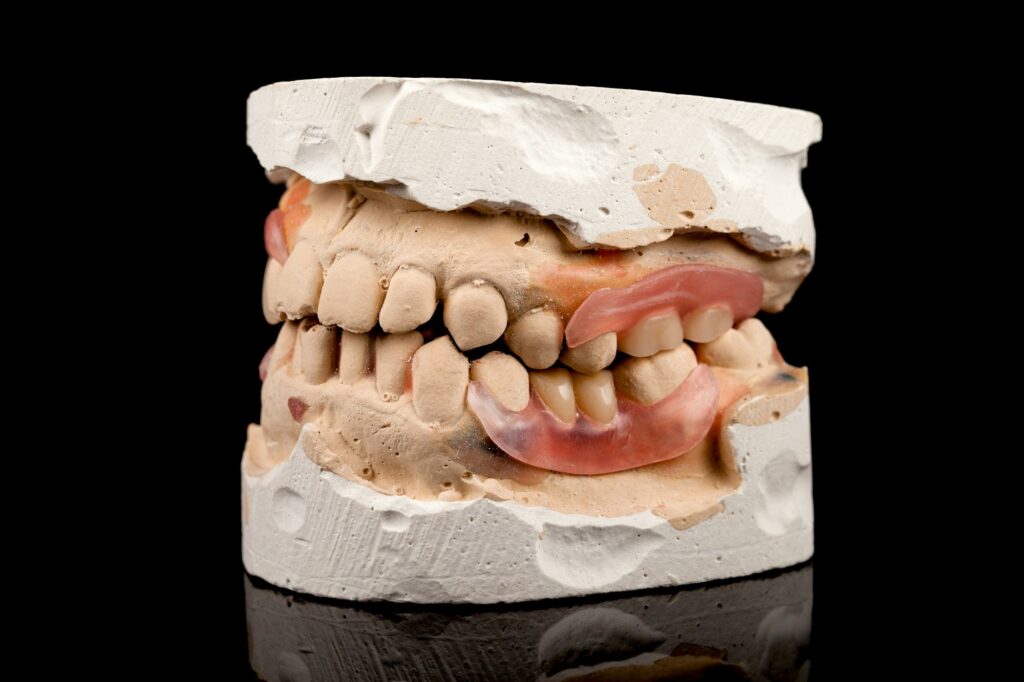
These are what most people imagine when they hear the word “dentures.” They are removable appliances designed to replace missing teeth and rely on suction or clasps for stability.


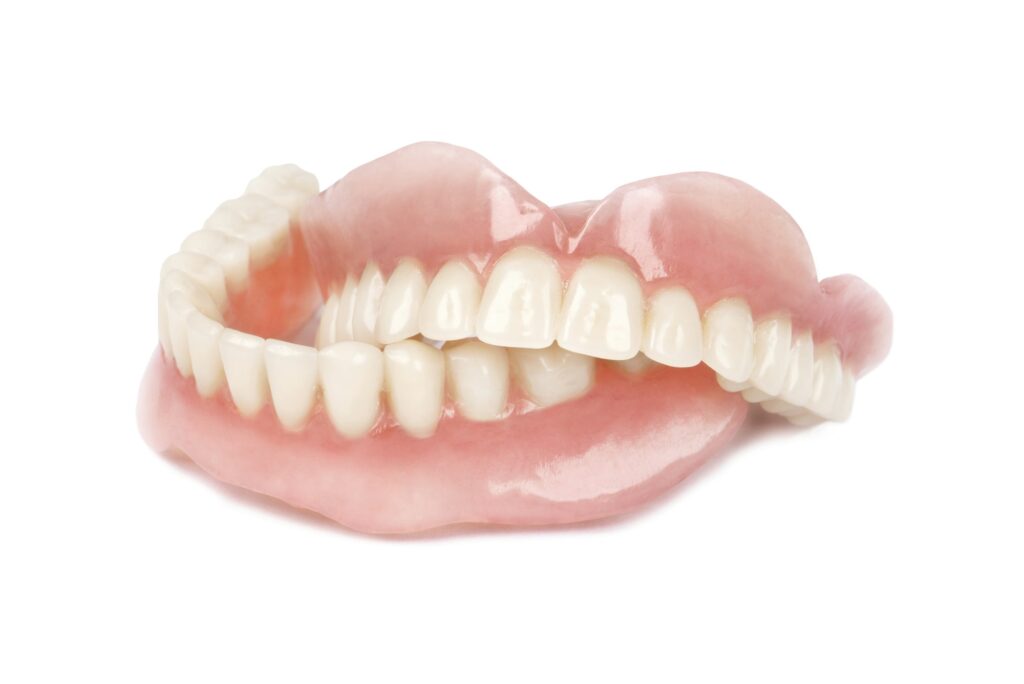
Complete (Full) Dentures
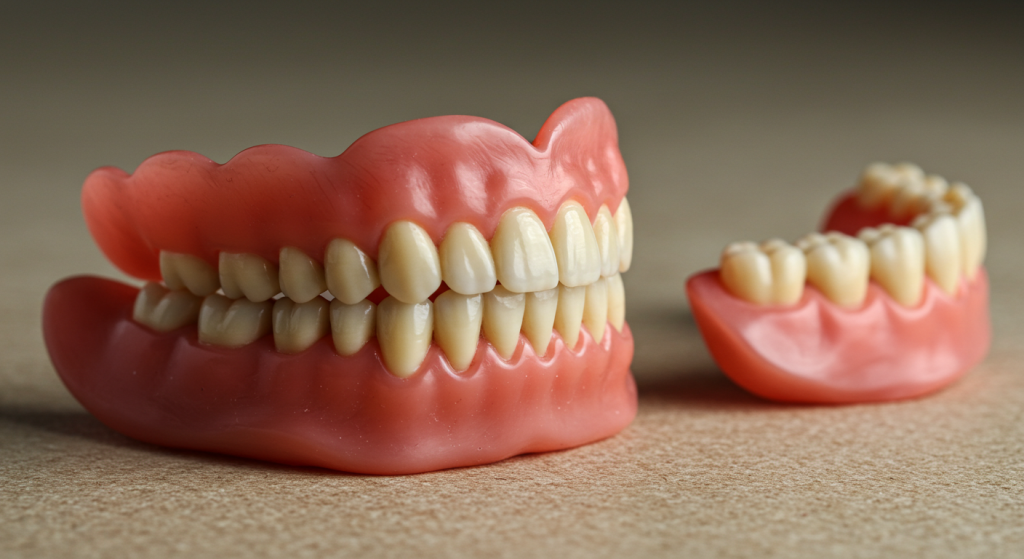
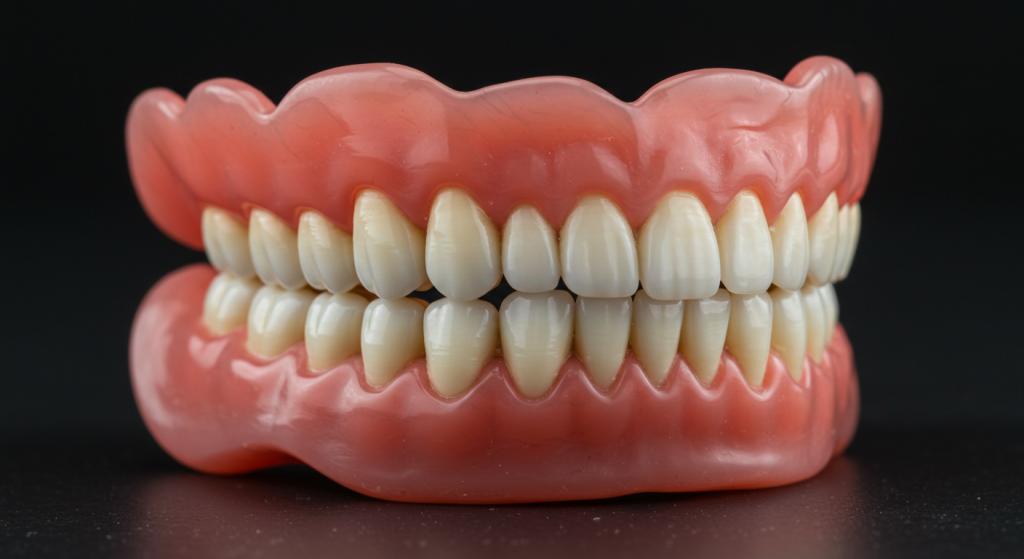
Used when all natural teeth are missing in an arch (upper or lower). They consist of a flesh-colored acrylic base that fits over your gums.
- Upper Dentures: Cover the roof of the mouth (palate) to create suction.
- Lower Dentures: Horseshoe-shaped to leave room for the tongue.
Pros: Non-surgical and cost-effective.
Cons: Can slip while eating; upper dentures may reduce taste sensation due to palate coverage.
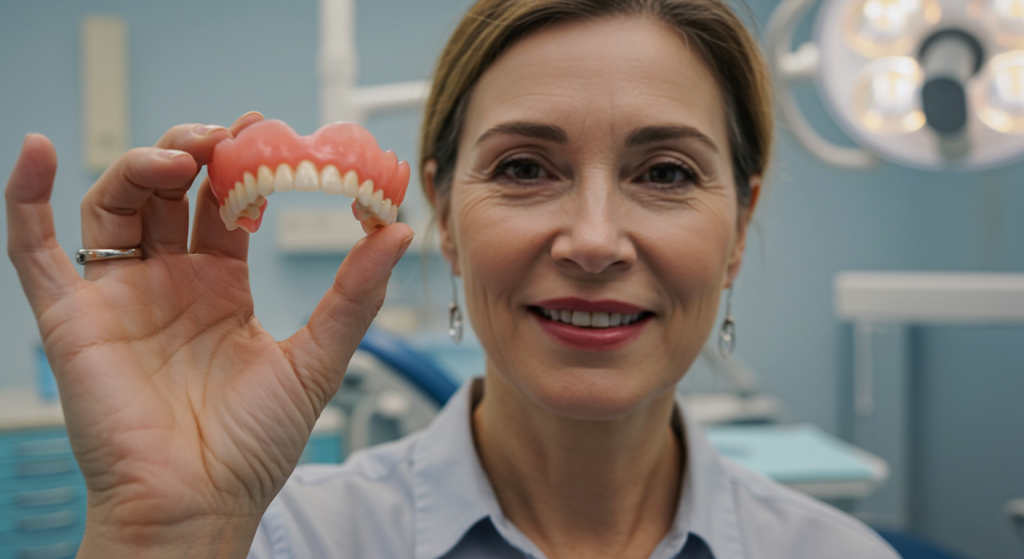
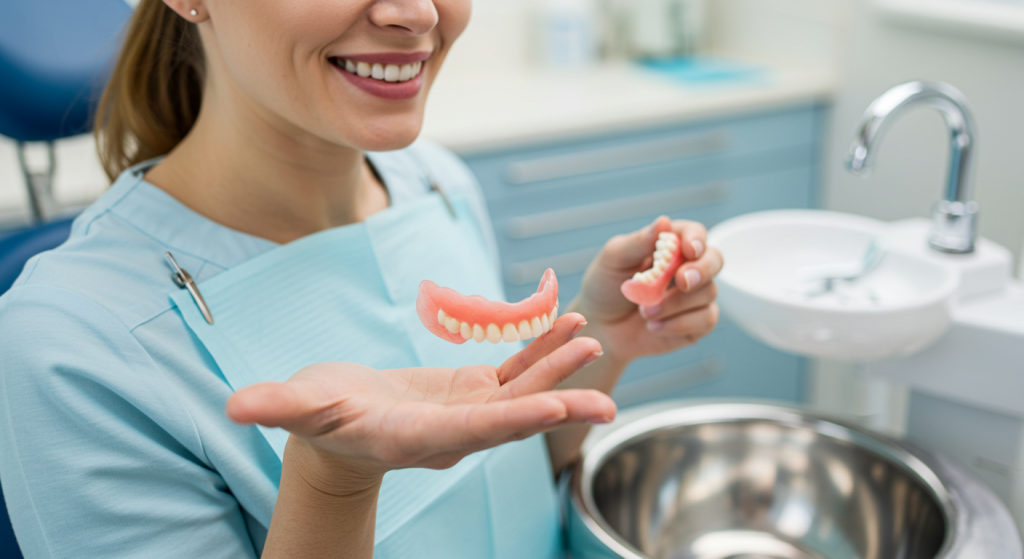
Partial Dentures
If you still have healthy natural teeth, we never want to extract them unnecessarily. Partial dentures fill the gaps, preventing your remaining teeth from shifting.
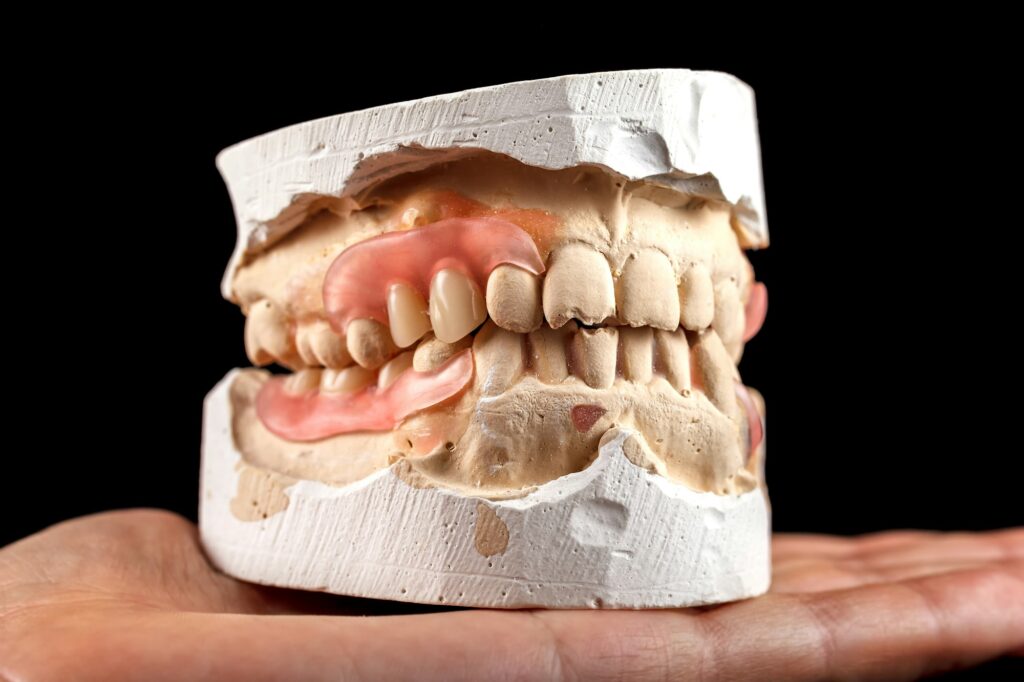
- Cast Metal Partials: Strong and durable, using metal clasps to grip natural teeth.
- Flexible Partials (Valplast): Made from nylon thermoplastic. They are lightweight, metal-free, and blend seamlessly with your gums for better aesthetics.
Implant-Supported Dentures (The Modern Standard)
For patients who want to avoid the embarrassment of slipping teeth, Implant-Supported Dentures are the superior medical choice. Instead of resting on sensitive gums, these dentures anchor directly to titanium posts surgically placed in the jawbone.
Fixed "Hybrid" Dentures (All-on-4)
These are permanently screwed onto 4 or 6 implants. You cannot remove them yourself; only a dentist can. They function exactly like natural teeth.
“Many patients come to us complaining that their traditional dentures float or click when they speak. By placing just four strategic implants, we can lock the prosthesis in place. This not only restores 90% of chewing power but also stimulates the jawbone to prevent facial collapse.”
— Dr. Aslı Ataseven, Maxillofacial Surgeon
Learn more about this life-changing procedure on our All-on-4 Dental Implants page.
Snap-On Dentures (Overdentures)
A middle-ground solution. These are removable for cleaning but “snap” securely onto 2 or 4 mini-implants or locator bars during the day. They offer much better stability than traditional dentures at a lower cost than fixed hybrids.

Temporary & Transitional Options
We believe no patient should ever have to walk around without teeth. That is why we offer immediate solutions.
Immediate Dentures
These are pre-fabricated and placed immediately after extraction. They act as a bandage to control bleeding and protect tissues. However, as your gums heal and shrink over 3-6 months, these will become loose and require relining.
Flipper Dentures
A temporary, lightweight partial denture used to replace one or two teeth while you wait for a Single Tooth Implant to heal. They are not designed for long-term heavy chewing.
Comparison: Traditional vs. Implant-Supported
| Feature | Traditional Dentures | Implant-Supported (Fixed) |
|---|---|---|
| Stability | Relies on suction/glue. May slip. | Anchored to bone. Zero movement. |
| Chewing Power | 20-30% of natural bite. | 90-95% of natural bite. |
| Bone Health | Accelerates bone loss over time. | Preserves bone via stimulation. |
| Lifespan | 5-7 years (needs relining). | 15-20+ years (with care). |
Material Innovations: 3D Printed & Zirconia
At HCT, we utilize digital dentistry to create prosthetics that look hyper-realistic.
- 3D Printed Dentures: Using CAD/CAM technology, we scan your mouth digitally (no messy putty impressions) to create a perfect fit.
- Zirconia Bridges: For implant-supported options, we often use Zirconia. It is the strongest ceramic available, resistant to chipping and staining, unlike the acrylic used in traditional dentures.
If you have insufficient bone for implants, we may recommend bone augmentation Turkey or Sinus Lifting to build the necessary foundation.
Conclusion: Which Type is Right for You?
Choosing the right denture is not just about filling gaps; it is about choosing your quality of life. While traditional dentures are a valid quick fix, modern implant solutions offer a “set and forget” experience closest to natural teeth.
Contact us via our Contact Page or WhatsApp to schedule a free evaluation. Let’s find the perfect fit for your smile.
Pro Tip from Prof. Dr. Müjde Sevimay
“Patients often ask if they should choose ‘Flexible Dentures’ or ‘Metal Frameworks.’ While flexible nylon feels softer, it cannot be easily repaired or relined if your gums change shape. For long-term partials, a cast metal framework is actually healthier for the remaining teeth because it uses ‘rests’ to distribute chewing pressure evenly, preventing damage to your gums. Always prioritize biomechanics over just initial comfort.”
Legal Disclaimer
The information provided in this article is for informational purposes only and does not constitute medical advice. The content is not intended to be a substitute for professional medical diagnosis or treatment. Always seek the advice of your dentist or another qualified health provider with any questions you may have regarding a medical condition.
Frequently Asked Questions
1. How much do dentures cost in Turkey?
Dentures in Turkey are significantly more affordable than in the UK or US, typically offering savings of up to 70%. While traditional full dentures are very budget-friendly, many patients use these savings to upgrade to fixed options. Check our dentist price list in Turkey for current offers.
2. Can I sleep with my dentures in?
For traditional removable dentures, you should remove them at night to let your gums breathe and prevent fungal infections. However, fixed implant-supported dentures stay in your mouth 24/7, just like real teeth.
3. How long do dentures last?
Traditional acrylic dentures typically last 5-8 years before they need to be replaced due to wear or changes in your jawbone shape. Implant-supported options are much more durable and can last 15-20 years or more with proper hygiene.
4. Are modern dentures comfortable?
Yes. Unlike the bulky dentures of the past, modern digital dentures are designed with 3D scanning for a precise fit. However, all removable dentures require an adjustment period. Fixed implant dentures offer the highest comfort level as they do not press on the gums. Learn more about our package deals on our Dental Holiday page.
Prof. Dr. Müjde Sevimay
Prosthodontics Specialist | Faculty Member at Antalya Bilim UniversityProf. Dr. Müjde Sevimay is a distinguished specialist in Prosthetic Dentistry with over 25 years of extensive academic and clinical experience. After completing her PhD in 2002, she has built a significant academic career, achieving the rank of Professor in 2015. She has authored numerous articles in prestigious international journals, and her research focuses on implant-supported prostheses, aesthetic restorations, and contemporary dental materials.
- Education: PhD in Prosthodontics, Selçuk University (2002)
- Experience: 25+ Years (Since 1998)
- Authority: Widely published in national & international scientific journals.
- Research Focus: Implantology, Aesthetic Dentistry, Dental Materials.
- View Google Scholar Profile