How Do Dental Implants Stay In Place? Osseointegration 2026
If you are considering dental implants, your most pressing question is likely: “Will it be stable? How does it actually stay in place?”
It’s a common fear. Many patients imagine the implant is just a screw twisted into the bone, which could one day get loose or fall out.
As the “Internationally-Minded Expert” team at HCT Dental Clinic, with state-of-the-art facilities in Istanbul and Antalya, we want to eliminate this fear with clear, simple facts. The secret to a dental implant’s stability isn’t mechanical; it’s biological.
This guide will explain the amazing natural process that holds your implant in place—Osseointegration—and how our expert team and premium technology ensure you get a stable, permanent result. This is the foundation of the “Smart Investment” (Value) you make when choosing Turkey for your dental health.
The Secret: What is Osseointegration?
A dental implant doesn’t just “stay in place” like a screw in drywall. It actively fuses with your body to become a part of your jaw.
This process is called Osseointegration (os-ee-oh-in-tuh-GRAY-shun).
Here’s a simple analogy: Think of planting a young tree. At first, it’s just held in place by packed dirt. But over time, the tree’s roots grow into the surrounding soil, anchoring it so powerfully that it can withstand a storm.
A dental implant works the same way:
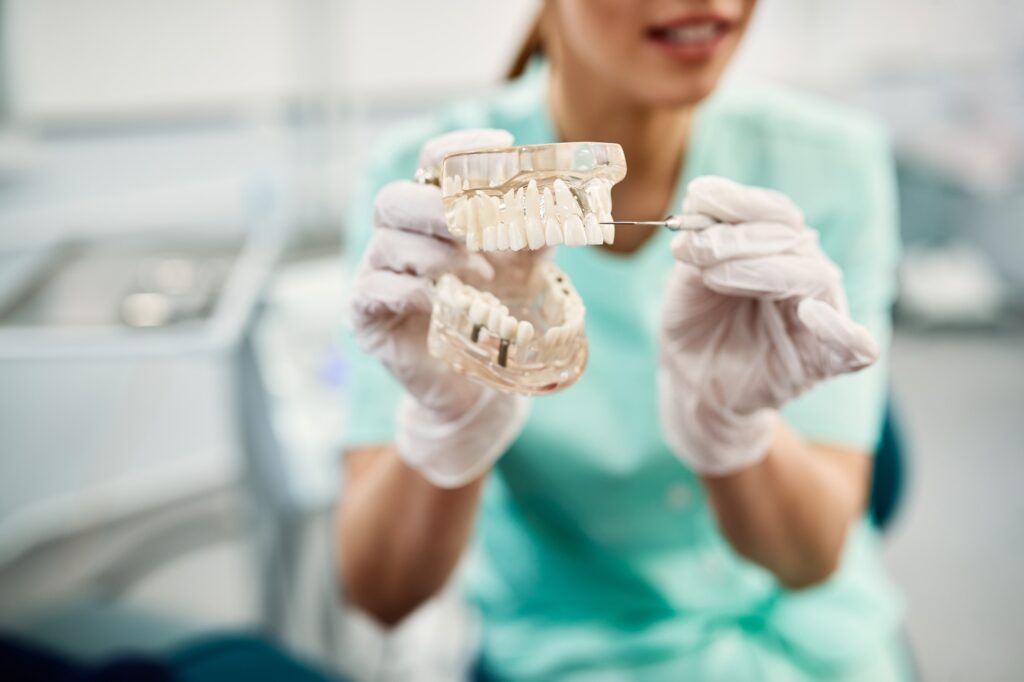
The Material: Implants are made of Titanium, a unique metal that your body does not recognize as “foreign.” Instead of rejecting it, your bone tissue treats it as a natural part of you.
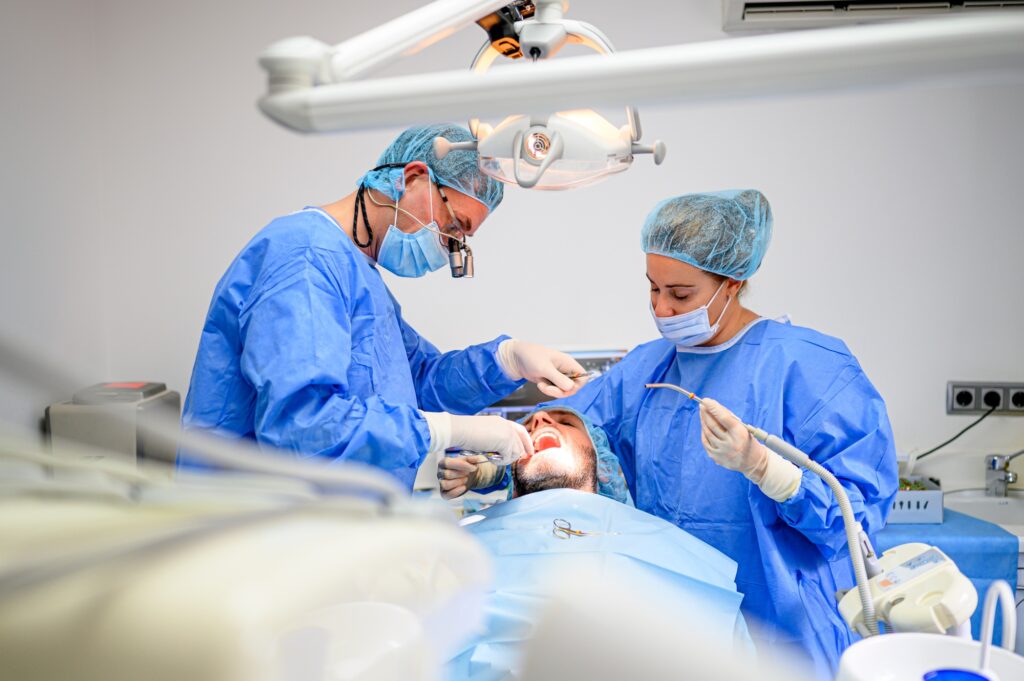
The Fusion: After the implant is gently placed into the jaw by a surgeon like Dr. Aslı Ataseven, your living bone cells (osteoblasts) begin to grow directly onto and into the implant’s microscopic surface.
The Result: Over 3 to 6 months, the implant and jawbone fuse into a single, solid, and permanent structure. The implant is no longer a separate object; it is an artificial tooth root that is fully integrated with your natural bone (PubMed, Journal of Oral Implantology).
This is why a successful implant feels, functions, and looks exactly like a natural tooth. It is held in place by your own living bone.
The Patient Journey: How Long Does Stability Take?
Understanding osseointegration is key to understanding the implant patient journey. The process requires patience, but our “Speed” motivation at HCT ensures the active treatment time is minimal.
- Visit 1: Surgery (Approx. 3-5 Days in Turkey):
- We conduct a 3D CBCT scan to plan the exact angle and position for stability.
- The implant (the titanium root) is placed.
- A temporary crown is fitted, and you fly home.
- Healing Phase: Osseointegration (3-6 Months at Home):
- This is the most critical phase. You are at home, and your body is doing the work, fusing your jawbone to the implant.
- Visit 2: Final Restoration (Approx. 5-7 Days in Turkey):
- You return to Istanbul or Antalya. We confirm the implant is “fully osseointegrated” and stable.
- Our prosthodontists, like Prof. Dr. Müjde Sevimay, then attach your permanent, custom-designed E-max crown to the solid implant foundation.
This two-visit process combines world-class treatment (Experience) with efficiency, allowing you to get the best care without upending your life.
Why the Implant Brand Matters for Osseointegration
Does the brand of the implant affect how well it stays in place? Absolutely.
At HCT Dental Clinic, we only use globally recognized premium brands:
Straumann: A world leader from Switzerland. Their SLActive® surface is a special coating that is scientifically designed to attract bone cells, accelerating the osseointegration process and increasing success rates, even in complex cases.
Medentika, Camlog, and NTA: Other A-grade brands known for their precision engineering and high-quality titanium, ensuring a reliable, long-term fusion.
Choosing a premium brand like Straumann is a key part of your “Smart Investment”—it’s an insurance policy for the long-term stability of your implant.

Winner: Best Health Tourism Co. 2023

AACI International Accredited
Int'l Health Tourism Certificate

Turkish Dental Association

ISO 9001:2015 Quality Certified
Winner: Best Health Tourism Co. 2023

AACI International Accredited
Int'l Health Tourism Certificate

Turkish Dental Association

ISO 9001:2015 Quality Certified
How We Guarantee a Stable Implant
(Attributed to: Prof. Dr. MÜJDE SEVİMAY - Head Dentist & Prosthodontics Professor)
“For an implant to stay in place, two factors are critical: primary stability (the initial surgical tightness) and secondary stability (the biological osseointegration). In our clinic, we are meticulous about both.
Using 3D CBCT scans, we digitally plan the surgery to place the implant in the densest available bone, maximizing primary stability. But just as importantly, we plan for the final bite (occlusal load). An implant that is fused perfectly can still fail if the crown on top distributes chewing forces incorrectly. As a prosthodontist, my job is to ensure that the final Zirconia Crown guides the bite forces down the implant’s long axis, protecting the bone fusion for decades. This fusion of surgical precision and prosthetic planning is our guarantee of stability.”
What if I Don't Have Enough Bone for Osseointegration?
This is the most common “pain point” we hear: “What if my bone isn’t strong enough?”
If you’ve had a missing tooth for many years, your jawbone may have atrophied (shrunk) from lack of use. Placing an implant directly into thin or weak bone is a primary cause of implant failure.
A cheap clinic might take the risk. An expert clinic will solve the problem first.
Preparatory Treatment 1: Bone Grafting: If you lack bone width or height, we perform a Bone Grafting procedure. We add special bone mineral material to the area, which acts as a scaffold for your own body to grow new, dense bone.
Preparatory Treatment 2: Sinus Lifting: For the upper back teeth, the sinus cavity often sits too low. A Sinus Lift is a procedure where we gently raise the sinus membrane and place bone graft material beneath it, creating the solid foundation needed for the implant.
This holistic approach means we don’t just hope for osseointegration—we create the perfect environment for it to happen.
What Can Make a Stable Implant Fail? (Risks & Aftercare)
Once osseointegration is complete, an implant is incredibly strong. However, like a natural tooth, it can fail if not cared for.
Treatment Risk: Peri-implantitis: This is the #1 enemy of a stable implant. It’s an infection in the gums and bone around the implant, caused by poor oral hygiene. It’s the implant version of gum disease. If left untreated, it destroys the bone that is fused to the implant, causing it to become loose.
Aftercare Rules (Mandatory): Your implant’s stability is a partnership.
You MUST brush and floss daily to prevent peri-implantitis.
You MUST attend regular dental check-ups.
You MUST avoid smoking, especially during the 3-6 month healing phase, as it dramatically reduces blood flow and can cause osseointegration to fail.
Our HCT Dental Clinic team, including all our specialist doctors, provides a detailed aftercare plan to ensure your investment is protected for life.
Cost Comparison: The "Smart Investment" in Stability (2026)
Ensuring stability (osseointegration) sometimes requires preparatory treatments. The “Value” of choosing Turkey is that you can afford both the premium implant and the necessary preparatory work for less than the cost of just one implant in the UK or USA.
| Procedure for Implant Stability | Average Cost (UK/USA) | Average Cost (HCT Dental Clinic - Turkey) |
|---|---|---|
| Single Dental Implant (incl. Straumann + Crown) | €4,000 - €6,000 | €900 - €1,800 |
| Preparatory Bone Graft (Per Area) | €1,200 - €2,500 | €250 - €600 |
| Preparatory Sinus Lift | €2,000 - €3,500 | €400 - €800 |
Conclusion: It's Not a Screw, It's a Fusion
So, how do dental implants stay in place? They are not just held in by friction. They stay in place because your own living bone fuses with the high-grade titanium, making the implant a permanent, stable, and non-removable part of your jaw.
This biological miracle of osseointegration is the key.
At HCT Dental Clinic, we ensure this fusion is successful by using:
Expert Surgeons: (Like Dr. Aslı Ataseven) who place the implant perfectly.
Premium Brands: (Like Straumann) that encourage faster, stronger bone growth.
Holistic Planning: (Like Bone Grafting) to build a solid foundation before we start.
Master Prosthodontists: (Like Prof. Dr. Müjde Sevimay) who design a final crown that protects the implant from bad bite forces.
If you are considering a full mouth of dental implants or even a single tooth, our teams in Istanbul and Antalya are ready to explain every step of the process.
Frequently Asked Questions
A dental implant is held in place by a biological process called osseointegration. This is where your living jawbone cells grow directly onto and fuse with the biocompatible titanium implant, making it a permanent and stable part of your jaw, just like a natural tooth root.
The implant has “primary stability” immediately after surgery. However, the final, permanent biological stability from osseointegration takes time. This healing phase typically lasts 3 to 6 months, after which the implant is fully fused and ready for its permanent crown.
Yes, though it is rare. A new implant can fail if osseointegration doesn’t happen (often due to smoking or poor health). An old, stable implant can become loose if you develop peri-implantitis (a gum infection around the implant) due to poor oral hygiene. This is why daily care is mandatory.
Yes. Premium dental implant brands like Straumann invest heavily in surface technology (like SLActive®). This special surface is designed to attract bone cells and accelerate the osseointegration process, leading to a faster, stronger, and more reliable fusion between the implant and your bone.
Ready to Build a Stable, Permanent Smile?
Don’t let the fear of a “loose implant” stop you from reclaiming your health. Now that you understand the science of osseointegration, the next step is to trust a team that masters it.
Our international patient coordinators in Istanbul and Antalya are ready to schedule your free virtual consultation. We will analyze your X-rays and show you exactly how we will build a stable, lasting foundation for your new smile. Contact HCT Dental Clinic today.
Legal Disclaimer
The information provided in this article is for informational purposes only and does not constitute medical advice. The content is not intended to be a substitute for professional medical diagnosis or treatment. Always seek the advice of your dentist or another qualified health provider with any questions you may have regarding a medical condition.
Latest Dental Implant Blog Posts
Prof. Dr. Müjde Sevimay
Prosthodontics Specialist | Faculty Member at Antalya Bilim UniversityProf. Dr. Müjde Sevimay is a distinguished specialist in Prosthetic Dentistry with over 25 years of extensive academic and clinical experience. After completing her PhD in 2002, she has built a significant academic career, achieving the rank of Professor in 2015. She has authored numerous articles in prestigious international journals, and her research focuses on implant-supported prostheses, aesthetic restorations, and contemporary dental materials.
- Education: PhD in Prosthodontics, Selçuk University (2002)
- Experience: 25+ Years (Since 1998)
- Authority: Widely published in national & international scientific journals.
- Research Focus: Implantology, Aesthetic Dentistry, Dental Materials.
- View Google Scholar Profile